
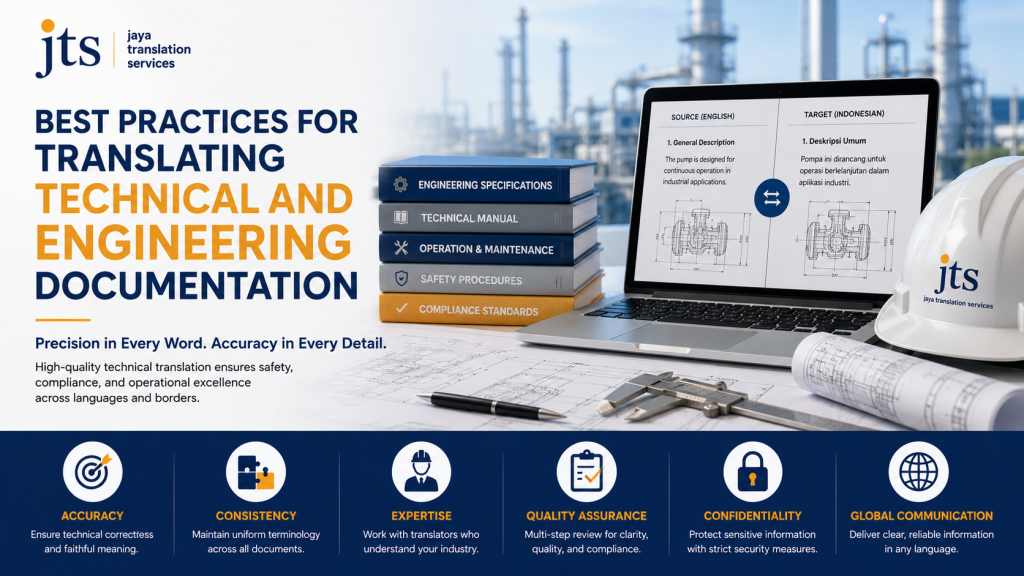
Technical and engineering documentation forms the foundation of many industries, from manufacturing and construction to energy, telecommunications, transportation, and infrastructure development. These documents provide essential information that enables organizations to operate safely, efficiently, and in compliance with industry standards.
As companies increasingly work across international markets, the need for accurate technical translation has become more important than ever. A poorly translated engineering document can lead to misunderstandings, operational delays, safety risks, regulatory issues, and costly project errors.
Unlike general translation, technical translation requires specialized knowledge, precision, and strict attention to detail. Understanding the best practices involved can help organizations ensure their technical information remains accurate and effective across languages.
What Is Technical and Engineering Translation?
Technical translation involves converting specialized documents from one language into another while preserving technical accuracy, terminology, and intended meaning.
Examples of technical and engineering documents include:
- Engineering specifications
- Technical manuals
- Equipment operating instructions
- Safety procedures
- Standard operating procedures (SOPs)
- Product documentation
- Construction drawings and reports
- Maintenance guides
- Environmental impact assessments
- Infrastructure project documentation
- Research and development reports
These materials often contain highly specialized terminology that requires both linguistic expertise and subject matter knowledge.
Why Accuracy Is Critical
Technical documents are often used to guide important decisions and operational activities.
Even a small translation error can result in:
- Equipment misuse
- Production downtime
- Safety incidents
- Regulatory non-compliance
- Construction errors
- Increased project costs
For example, an incorrectly translated maintenance procedure could cause technicians to perform tasks improperly, potentially leading to equipment damage or workplace hazards.
Accuracy is therefore the cornerstone of every successful technical translation project.
Work with Subject Matter Experts
One of the most important best practices in technical translation is assigning projects to translators with relevant industry expertise.
Technical terminology varies significantly between sectors such as:
- Civil engineering
- Mechanical engineering
- Electrical engineering
- Oil and gas
- Renewable energy
- Manufacturing
- Telecommunications
- Information technology
- Construction and infrastructure
A professional translator with engineering knowledge understands both the language and the technical concepts behind the content.
This expertise reduces the risk of incorrect terminology and improves overall translation quality.
Develop and Maintain Terminology Glossaries
Consistency is essential in technical documentation.
Organizations often use specific terms, product names, system components, and operational procedures that must be translated consistently across all materials.
Creating a terminology glossary helps ensure:
- Standardized vocabulary
- Consistent translations
- Improved readability
- Reduced ambiguity
- Alignment with company standards
Glossaries become particularly valuable for long-term projects involving multiple documents, translators, or departments.
Many international organizations and engineering firms maintain approved terminology databases to support multilingual communication.
Understand the Target Audience
Technical documents are created for different types of users, including:
- Engineers
- Technicians
- Maintenance personnel
- Regulatory authorities
- Project managers
- End users
A high-quality translation considers the knowledge level and expectations of the intended audience.
For example:
- A technical specification may require precise engineering terminology.
- A user manual may require simpler, more accessible language.
- A safety guide may require highly explicit instructions to minimize risk.
Understanding the audience helps ensure the translated content remains practical and effective.
Preserve Technical Accuracy Over Literal Translation
Technical translation should prioritize meaning and functionality rather than word-for-word conversion.
Languages often differ in:
- Sentence structure
- Grammar
- Technical conventions
- Industry terminology
A literal translation may sound unnatural or create confusion.
Professional translators focus on conveying the intended technical meaning while adapting language appropriately for the target audience.
The goal is to ensure users can correctly understand and apply the information.
Pay Special Attention to Units and Measurements
Engineering documents frequently contain:
- Dimensions
- Weights
- Temperatures
- Pressure values
- Electrical ratings
- Scientific measurements
Errors involving units can have serious consequences.
Translators should carefully verify:
- Metric and imperial units
- Decimal formatting
- Numerical values
- Engineering symbols
- Industry-standard notation
Consistency in measurements is essential for maintaining operational accuracy and safety.
Maintain Compliance with Industry Standards
Many technical documents must comply with national or international regulations.
Depending on the industry, documents may reference:
- ISO standards
- Engineering codes
- Environmental regulations
- Safety requirements
- Government guidelines
- Industry best practices
Professional translators should understand relevant regulatory frameworks and ensure that translated documents remain compliant with applicable standards.
This is particularly important for infrastructure, energy, healthcare, and manufacturing projects.
Implement a Structured Quality Assurance Process
Technical translation requires rigorous quality control.
A professional workflow typically includes:
Translation
The initial document is translated by a qualified technical translator.
Technical Review
A reviewer checks terminology, consistency, and technical accuracy.
Editing
Language quality and readability are refined.
Proofreading
The final document is examined for formatting, grammar, and typographical issues.
Final Verification
A complete review ensures the translated document aligns with project requirements.
Multiple layers of review significantly reduce the risk of errors.
Protect Confidential Information
Technical and engineering documents often contain proprietary information, including:
- Product designs
- Engineering drawings
- Manufacturing processes
- Research findings
- Commercial specifications
Organizations should work with language service providers that implement strong confidentiality measures.
These may include:
- Secure file transfer systems
- Restricted document access
- Confidentiality agreements
- Data protection procedures
Protecting intellectual property is an important part of professional technical translation services.
Leverage Translation Technology Wisely
Modern translation tools can improve efficiency and consistency when used appropriately.
Common technologies include:
- Translation memory systems
- Terminology management software
- Quality assurance tools
- Project management platforms
These tools help maintain consistency across large projects while reducing repetitive work.
However, technology should support—not replace—human expertise.
Technical content still requires professional review to ensure accuracy and contextual understanding.
Common Mistakes to Avoid
Organizations can improve translation outcomes by avoiding these common mistakes:
- Selecting translators without technical expertise
- Relying solely on machine translation
- Failing to provide reference materials
- Neglecting terminology management
- Skipping quality assurance reviews
- Ignoring local regulatory requirements
- Using inconsistent technical terminology
Addressing these issues early helps minimize risks and improve communication effectiveness.
Conclusion
Technical and engineering translation is a highly specialized field that requires far more than language proficiency. Successful projects depend on technical expertise, terminology consistency, rigorous quality control, and a deep understanding of industry requirements.
By following best practices such as working with subject matter experts, maintaining terminology glossaries, implementing structured quality assurance processes, and protecting confidential information, organizations can ensure their technical documentation remains accurate, reliable, and effective across languages.
At Jaya Translation Services, we support engineering firms, manufacturers, infrastructure projects, government agencies, and international organizations with professional technical translation services designed to meet the highest standards of accuracy, consistency, and confidentiality.
When precision matters, professional technical translation makes all the difference.