
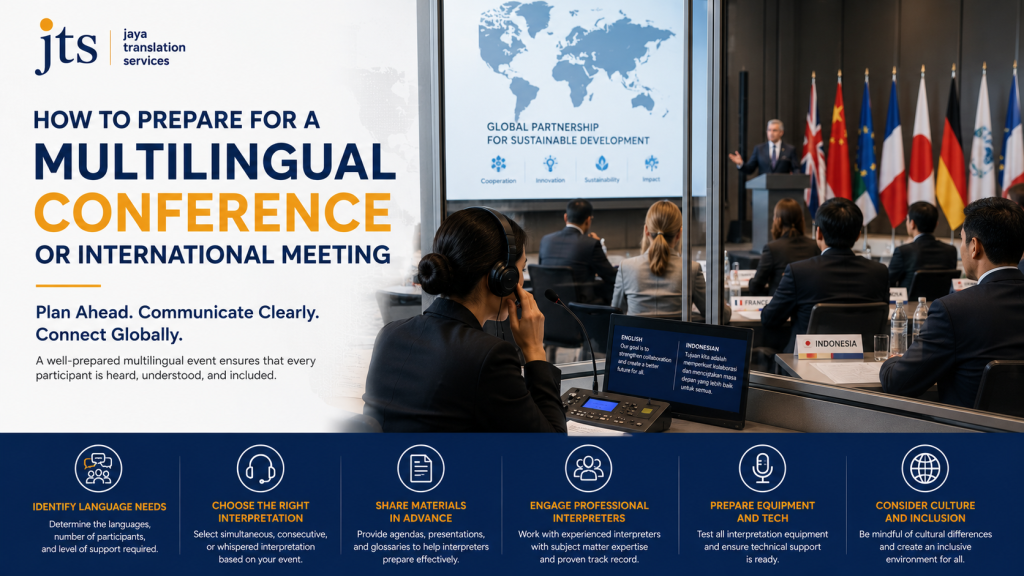
In today’s global business environment, multilingual conferences and international meetings have become increasingly common. Organizations regularly bring together participants from different countries, cultures, and language backgrounds to discuss policies, share knowledge, negotiate agreements, and strengthen partnerships.
While these events create valuable opportunities for collaboration, language barriers can quickly become a challenge if proper planning is not in place. Effective communication is essential for ensuring that every participant can contribute, understand discussions, and engage meaningfully.
Whether you are organizing a government forum, an international conference, a development workshop, or a corporate meeting, proper preparation is the key to a successful multilingual event.
Why Language Planning Matters
A multilingual event involves more than simply hiring an interpreter on the day of the meeting.
Without adequate preparation, organizers may encounter:
- Miscommunication between participants
- Delays during discussions
- Technical difficulties with interpretation equipment
- Reduced audience engagement
- Inaccurate understanding of presentations and decisions
Investing time in language planning helps create an inclusive environment where all participants can communicate effectively regardless of their native language.
Identify Language Requirements Early
One of the first steps in organizing a multilingual event is understanding the language needs of your participants.
Ask questions such as:
- Which languages will be spoken?
- How many participants require language support?
- Will attendees be passive listeners or active speakers?
- Are multiple languages needed simultaneously?
Gathering this information early allows organizers to select the appropriate interpreting services and technical arrangements.
For large international conferences, language requirements should ideally be determined several weeks or months before the event.
Choose the Right Type of Interpretation
Different events require different interpreting solutions.
Simultaneous Interpretation
Simultaneous interpretation allows participants to listen to the translated message in real time through headsets while the speaker continues speaking without interruption.
This option is ideal for:
- International conferences
- Government forums
- United Nations meetings
- Large seminars and symposiums
Benefits include:
- Efficient communication
- Minimal interruption
- Support for multiple languages
- Enhanced participant engagement
Consecutive Interpretation
In consecutive interpretation, the speaker pauses periodically to allow the interpreter to deliver the message.
This method is commonly used for:
- Business meetings
- Training sessions
- Interviews
- Small workshops
- Bilateral discussions
Whispered Interpretation
Whispered interpretation is suitable when only one or two participants require language assistance.
The interpreter quietly translates the discussion without the need for specialized equipment.
Engage Professional Interpreters
The quality of interpretation can significantly impact the success of an event.
Professional interpreters possess:
- Advanced language proficiency
- Excellent listening skills
- Strong memory and concentration
- Cultural awareness
- Subject matter expertise
When selecting interpreters, consider their experience in the relevant field, whether it involves law, healthcare, education, international development, finance, or technical subjects.
Experienced interpreters are better equipped to handle specialized terminology and complex discussions.
Share Event Materials in Advance
Providing interpreters with background materials before the event is one of the most effective ways to improve interpretation quality.
Useful materials may include:
- Event agenda
- Presentation slides
- Speaker biographies
- Technical documents
- Reports and reference materials
- Glossaries of key terminology
Advance preparation allows interpreters to familiarize themselves with subject matter, terminology, and discussion topics.
As a result, communication becomes more accurate and efficient during the event.
Prepare Interpretation Equipment
For conferences utilizing simultaneous interpretation, reliable equipment is essential.
Common equipment includes:
- Interpreter booths
- Wireless receivers
- Participant headsets
- Microphones
- Audio distribution systems
Before the event begins, conduct a complete technical check to ensure:
- Audio quality is clear
- Headsets are functioning properly
- Microphones operate correctly
- Interpretation channels are accessible
- Backup equipment is available
Technical failures can significantly disrupt communication and affect the participant experience.
Brief Speakers Before the Event
Many speakers have limited experience working with interpreters.
A short briefing can help improve communication quality.
Encourage speakers to:
- Speak clearly and at a moderate pace
- Avoid reading excessively fast
- Provide presentation materials in advance
- Minimize the use of unexplained acronyms
- Pause naturally between key points
These simple adjustments make interpretation more accurate and easier for participants to follow.
Consider Cultural Differences
Language is only one aspect of international communication.
Participants from different countries may have varying expectations regarding:
- Communication styles
- Meeting etiquette
- Decision-making processes
- Formality levels
- Question-and-answer sessions
Event organizers should remain sensitive to cultural differences and create an environment that encourages respectful and inclusive dialogue.
Professional interpreters often play an important role in bridging both linguistic and cultural gaps.
Plan for Hybrid and Virtual Meetings
Many international meetings now combine in-person and remote participation.
Hybrid and virtual events require additional planning to ensure seamless multilingual communication.
Consider:
- Remote interpretation platforms
- Stable internet connectivity
- Audio quality standards
- Technical support teams
- Participant training and instructions
Testing all systems before the event can prevent avoidable disruptions.
Create a Positive Participant Experience
Successful multilingual events prioritize accessibility and inclusion.
Participants should feel comfortable engaging in discussions regardless of language differences.
Simple steps can make a significant impact:
- Clearly label interpretation channels
- Provide multilingual event materials
- Offer technical support for attendees
- Communicate instructions in multiple languages
- Ensure interpreters can hear speakers clearly
These measures help participants focus on the content rather than the language barrier.
Common Mistakes to Avoid
Event organizers frequently encounter challenges when language services are treated as an afterthought.
Avoid these common mistakes:
- Booking interpreters at the last minute
- Failing to provide preparation materials
- Underestimating equipment requirements
- Choosing interpreters without subject matter expertise
- Neglecting technical testing
- Ignoring participant language needs
Proper planning reduces risks and contributes to a more professional and productive event.
Conclusion
A multilingual conference or international meeting requires careful preparation to ensure effective communication among participants from different linguistic and cultural backgrounds.
By identifying language requirements early, selecting the appropriate interpretation method, providing advance materials, preparing technical equipment, and engaging experienced interpreters, organizations can create successful events that foster understanding and collaboration.
At Jaya Translation Services, we support international conferences, government forums, development programs, corporate meetings, and multilingual events with professional interpreting services and conference language solutions tailored to each client’s needs.
When communication matters, preparation makes all the difference.