
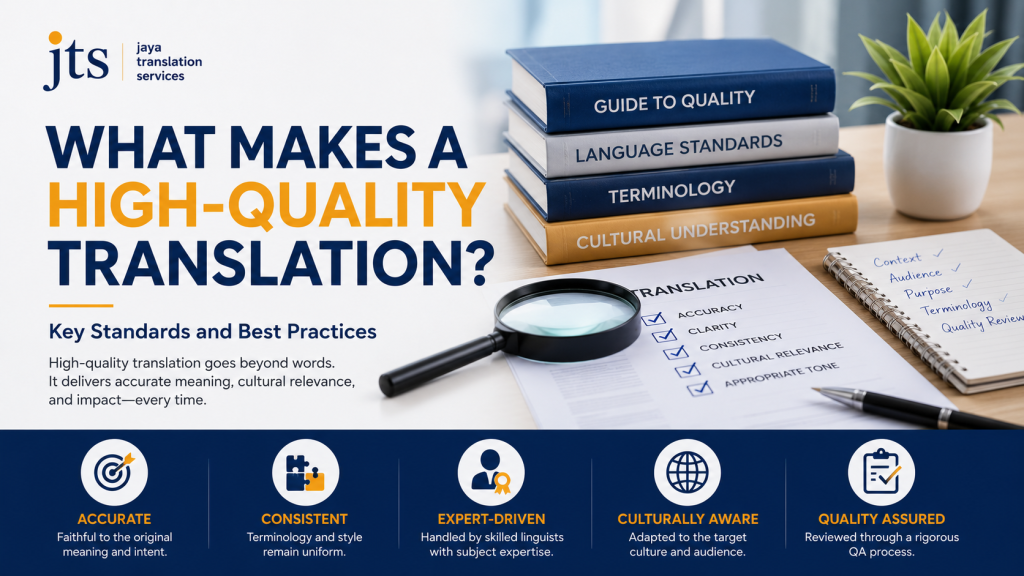
In an increasingly globalized world, organizations rely on accurate communication to connect with international audiences, partners, and stakeholders. Whether translating a legal contract, technical manual, marketing campaign, or development report, quality translation plays a critical role in ensuring messages are understood exactly as intended.
However, not all translations are created equal. A high-quality translation goes far beyond replacing words from one language with words from another. It requires linguistic expertise, subject matter knowledge, cultural awareness, and a commitment to accuracy.
So, what exactly defines a high-quality translation?
Beyond Word-for-Word Translation
One of the most common misconceptions about translation is that it involves converting words directly from one language into another. In reality, professional translation focuses on conveying meaning, intent, and context.
Different languages have unique grammatical structures, cultural references, and communication styles. A literal translation may be technically correct but still fail to communicate the intended message.
For example, an expression that makes perfect sense in English may sound confusing or inappropriate when translated word-for-word into another language. Professional translators adapt content while preserving its original purpose and tone.
Accuracy Is the Foundation
The primary goal of any translation is accuracy.
A high-quality translation faithfully reflects the meaning of the source text without adding, omitting, or distorting information.
Accuracy is especially important in:
- Legal documentation
- Government publications
- Technical manuals
- Financial reports
- Medical materials
- Academic research
Even minor errors can lead to misunderstandings, financial losses, legal complications, or reputational damage.
Professional translators carefully review terminology, context, and subject matter to ensure the translated content accurately represents the original document.
Consistency Matters
Consistency is a key indicator of translation quality.
Organizations often use specific terminology, brand language, product names, and technical vocabulary that must remain consistent across all documents.
For example, a government agency may use standardized terminology throughout policy documents, while a multinational company may have established brand guidelines for marketing materials.
Professional translators often use terminology databases and translation memories to maintain consistency across projects and over time.
Consistent translations improve readability, strengthen brand identity, and enhance credibility.
Subject Matter Expertise
Language skills alone are not enough to produce high-quality translations.
Different industries have specialized terminology and unique communication requirements. A translator working on a legal contract requires a different skill set from someone translating an engineering manual or academic research paper.
Experienced language service providers assign projects to translators with relevant industry expertise, including:
- Legal translation
- Technical translation
- Financial translation
- Academic translation
- International development documentation
- Marketing and communications
Subject matter expertise ensures terminology is used correctly and industry standards are respected.
Cultural Adaptation and Localization
Effective communication requires more than linguistic accuracy—it also requires cultural understanding.
A phrase, image, or reference that resonates with one audience may not have the same impact in another culture.
Localization is the process of adapting content to suit the cultural and linguistic expectations of a target audience.
This may involve adjusting:
- Dates and number formats
- Currency references
- Measurement units
- Cultural references
- Marketing messages
- Visual elements
By considering cultural nuances, translators help ensure content feels natural and relevant to local audiences.
Clear and Natural Language
A high-quality translation should read as if it were originally written in the target language.
Readers should not feel as though they are reading a translated document.
Professional translators focus on:
- Natural sentence structure
- Appropriate tone
- Clear communication
- Audience expectations
- Readability
The final result should be fluent, coherent, and easy to understand while maintaining the meaning of the original content.
Quality Assurance and Revision
Professional translation involves multiple stages of quality control.
A typical quality assurance process may include:
Translation
The translator produces the initial version of the document.
Editing
A second language professional reviews the translation for accuracy, terminology, and consistency.
Proofreading
The final version is checked for grammar, spelling, formatting, and presentation.
Final Quality Review
The document undergoes a final assessment before delivery.
This structured approach significantly reduces errors and improves overall quality.
Confidentiality and Security
For many organizations, translation quality is closely linked to confidentiality.
Sensitive documents may contain:
- Legal agreements
- Financial information
- Government reports
- Research data
- Business strategies
Professional language service providers implement strict confidentiality measures to protect client information.
These may include secure file handling procedures, restricted access controls, and confidentiality agreements with translators and project personnel.
Human Expertise vs. Machine Translation
Machine translation tools have become increasingly sophisticated and can be useful for understanding basic information.
However, machine-generated translations often struggle with:
- Context
- Tone
- Industry-specific terminology
- Cultural nuances
- Complex sentence structures
For high-stakes content, professional human translators remain essential.
Human expertise ensures accuracy, clarity, and cultural appropriateness that automated systems cannot consistently achieve.
Signs of a Professional Translation Provider
When selecting a language service provider, consider whether they offer:
- Experienced professional translators
- Industry-specific expertise
- Quality assurance processes
- Terminology management
- Confidentiality safeguards
- Interpreting and multilingual communication support
- Proven experience with international organizations and institutions
These factors contribute directly to the quality and reliability of the final translation.
Conclusion
A high-quality translation is the result of much more than language conversion. It combines accuracy, consistency, cultural understanding, subject matter expertise, and rigorous quality control to ensure communication remains clear and effective across languages.
Whether you are translating legal documents, technical materials, development reports, or marketing content, investing in professional translation services helps protect your message, strengthen your credibility, and support successful communication in global environments.
At Jaya Translation Services, we are committed to delivering accurate, reliable, and culturally appropriate language solutions that meet the highest professional standards for organizations, businesses, and institutions worldwide.